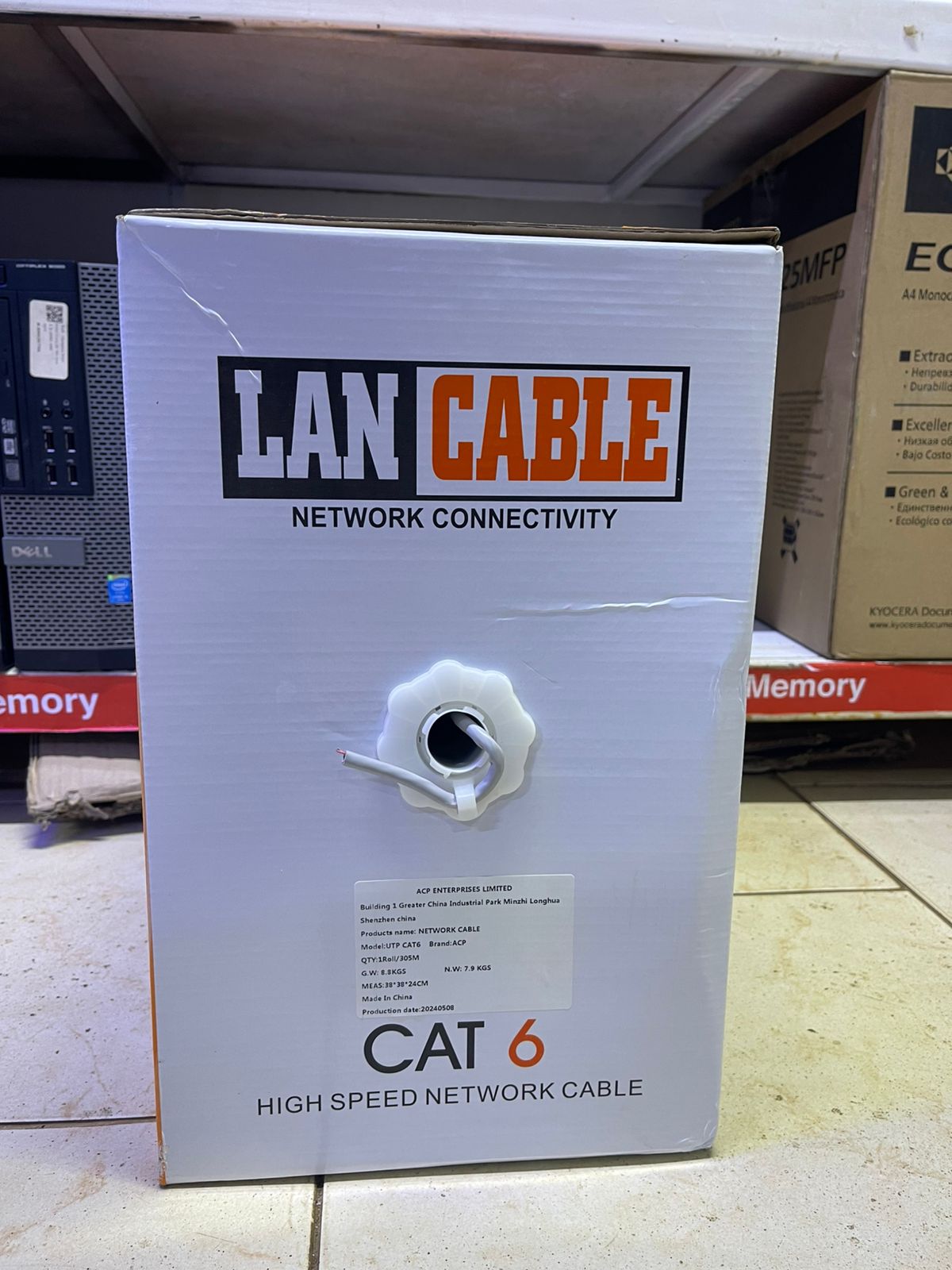
1 Gbps (Gigabit Ethernet): Supported reliably up to the standard maximum distance of 100 meters (328 feet). This is the most common use case for residential and office networks.
10 Gbps (10-Gigabit Ethernet): Supported up to 55 meters (180 feet). Beyond this distance, alien crosstalk typically degrades the signal too much for 10 Gbps stability.
2.5/5 Gbps: Often supported up to 100 meters using NBASE-T technology, making Cat 6 suitable for modern multi-gigabit internet plans.
Physical Construction
To achieve higher frequencies and reduce interference, Cat 6 cables feature stricter specifications for crosstalk and system noise than previous categories:
Conductor Gauge: Typically uses 23 AWG solid copper (for permanent installations) or stranded copper (for patch cables).
Twist Rate: The internal wire pairs are twisted more tightly than in Cat 5e.
Spline: Many Cat 6 cables include a longitudinal plastic spline (separator) that physically isolates the four twisted pairs to further reduce crosstalk and improve signal integrity.
Shielding: Available in both UTP (Unshielded Twisted Pair) for general use and STP/FTP (Shielded/Foiled) for environments with high electromagnetic interference.